
Salt system owners tell me the same thing every fall: “it’s low-maintenance, I don’t really think about it.” That’s true all summer. It stops being true the week before you close.
The cell is a wear item, and how you treat it going into winter decides whether you’re buying a replacement next season.
Skip the cell inspection at closing and you’re gambling $200-700 on whether it survives to spring. That’s the trade, plainly.
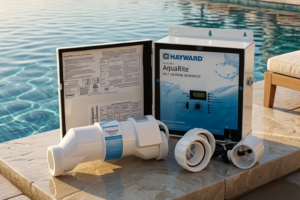 How do you winterize a salt chlorinator?
Quick answer: Inspect and clean the salt cell before closing (acid-wash only if calcium scale is visible), confirm salt level is in the 2,700-3,400 ppm range most cells require, then either remove the cell and store it indoors in freezing climates or leave it in place with the control box powered down, per your manufacturer’s cold-weather guidance. Never run a salt cell in water below approximately 50degF; most cells stop generating chlorine effectively below that temperature.
Step 1: Inspect the Cell Before Closing
Remove the cell from its housing (most twist-lock out without tools) and look at the metal plates inside. Light scale buildup is normal. Heavy white or gray calcium scale between the plates restricts water flow and reduces chlorine output, and it needs to be addressed before winter storage, not left to sit for months.
How to Acid-Wash a Scaled Cell
If scale is visible: mix a solution per your cell manufacturer’s instructions, typically a 4:1 water-to-muriatic-acid ratio, in a plastic (not metal) container. Submerge the cell’s plate end only, not the cord or connector end, for the time specified in your manual. Bubbling indicates the acid is dissolving scale. Remove once bubbling stops or scale visibly clears, then rinse thoroughly with fresh water.
Skip it if you don’t have eye protection and gloves on hand, or a well-ventilated outdoor space to do this. Always add acid to water, never water to acid, and never use a metal container, which the acid will react with.
Step 2: Confirm Salt Level Before Closing
Test salt level before closing so you know where you stand for spring startup. Most cells target 2,700-3,400 ppm, though check your specific unit’s target range. Salt doesn’t evaporate or get “used up” the way chlorine does; a properly closed pool should have roughly the same salt level in spring, minus dilution from rain and snowmelt.
- Below 2,700 ppm: Add salt now, before closing, so it has time to fully dissolve
- 2,700-3,400 ppm: Normal (verify against your model); no action needed
- Above 3,400 ppm: Note the level; do not add more salt. Dilution may be needed at opening
Step 3: Decide Whether to Remove the Cell for Winter
Climates with hard freezes: Remove the cell and any control box components rated for indoor storage. A cell left in a drained or freezing system risks internal cracking if any residual water freezes inside it.
Mild climates with no hard freeze: Many manufacturers allow the cell to stay in place through a mild winter, with the control box simply powered off. Check your specific model’s cold-weather guidance.
All climates: Power down and unplug the control box for the winter regardless of whether the cell is removed. This protects the electronics from power surges and prevents anyone from accidentally powering on a system with the water level too low for the cell.
In my experience the cutoff temperature matters more than most owners realize. Do not run your salt chlorinator once water temperature drops below approximately 50degF. Cells become significantly less efficient at generating chlorine in cold water, and continued operation accelerates plate wear without producing meaningful chlorine.
What Winter Does to an Unmaintained Cell
A cell closed with heavy scale buildup and left untouched all winter will have that scale bond more firmly to the plates over months of sitting, making the spring acid-wash far more difficult and sometimes impossible to fully clear. A cell that freezes with water inside it can crack internally in a way that isn’t visible until it fails to generate chlorine the following season.
Best for: Salt system owners willing to spend 20 minutes at closing checking the cell; that’s genuinely all it takes to avoid the expensive outcomes above.
Skip it if: Your cell already shows heavy scale that a full acid wash doesn’t clear. At that point the plate coating itself has likely degraded, and budgeting for a replacement cell is more honest than closing the pool with a marginal one.
Next Steps
Test your salt level and inspect the cell before you do anything else on your closing checklist; it takes less time than balancing the water. Doheny’s carries replacement salt cells across major system brands, test kits for salt level, and acid-wash supplies, with free shipping on orders over $50. Shop Doheny’s salt system parts, or start with my full closing guide for the rest of the sequence.
Disclaimer: This is general guidance based on my own experience with salt systems. Always follow your manufacturer’s specific cold-weather instructions, wear eye protection and gloves when handling muriatic acid, and consult a pool professional if your cell shows damage you’re not confident assessing yourself.
Frequently Asked Questions
- Q: How do you winterize a salt chlorinator?
A: Inspect and acid-wash the cell if scale is visible, confirm salt level is in your manufacturer’s target range (commonly 2,700-3,400 ppm), then remove and store the cell indoors in freezing climates or leave it in place with the control box powered down in mild climates. Stop running the cell once water temperature drops below approximately 50degF. - Q: Can you leave a salt cell in the pool over winter?
A: In climates without hard freezes, many manufacturers allow the cell to stay in place with the system powered down. In freezing climates, remove the cell and store it indoors to prevent internal cracking from any residual water freezing inside it. - Q: At what temperature should I stop running my salt chlorinator?
A: Around 50degF. Salt cells become significantly less efficient at generating chlorine below this temperature, and continued operation accelerates plate wear without meaningful chlorine output. - Q: How do I clean scale off a salt cell?
A: Mix a diluted muriatic acid solution per the manufacturer’s ratio (often 4:1 water to acid) in a plastic container, submerge only the plate end of the cell for the specified time, then rinse thoroughly. Always add acid to water, never the reverse, and wear eye protection and gloves.