
Above-ground closing is the easier of the two jobs, no plumbing to blow out, but I still see the same two mistakes every single fall: no air pillow, and someone walking on a cover that was never meant to hold weight.
Easier doesn’t mean it forgives shortcuts.
Skip either of those two things and you’re looking at a torn liner or worse come spring. Here’s the full sequence, in order.
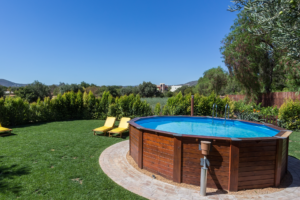 How do you close an above-ground pool for winter?
Quick answer: Balance the water (pH 7.2-7.6, TA 80-120 ppm), shock 2-3 days before closing, add winter algaecide once free chlorine drops below 4.0 ppm, clean and disconnect the filter and hoses, lower the water level a few inches below the skimmer, install an air pillow, and secure a winter cover with a cable and winch. Most above-ground closings take 1-2 hours.
Step 1: Balance and Test the Water
- pH: Target 7.2-7.6
- Total alkalinity: Target 80-120 ppm
- Calcium hardness: Target 175-225 ppm (lower end for vinyl liner pools, which most above-ground pools have)
- Cyanuric acid: Target 30-50 ppm
Vinyl liner pools specifically benefit from keeping calcium hardness toward the lower end of range; excess calcium can deposit on and stiffen vinyl over time.
Step 2: Shock, Then Add Winter Algaecide
Shock the pool 2-3 days before your planned closing date. Waiting a few days lets free chlorine drop back to normal range before you seal the pool, which avoids bleaching the liner or the cover material. Once free chlorine reads below 4.0 ppm, add a winter-strength algaecide dose.
Step 3: Clean and Store the Filter System
- Disconnect the pump and filter hoses and drain them fully. Any water left in a hose that freezes will crack it.
- Clean cartridges by hosing them down and soaking in filter cleaner overnight, then store indoors, dry, for the winter.
- Small sand filter tanks should be drained through the bottom drain plug and left open through winter.
- Store the pump indoors if possible.
Step 4: Lower the Water Level
Lower the water a few inches below the skimmer opening so freezing water in the skimmer throat doesn’t crack the housing. Don’t lower it dramatically further than that; the wall relies on water weight for structural support against the fill dirt outside it.
Step 5: Install an Air Pillow
An air pillow sits under the winter cover in the center of the pool and absorbs the outward pressure of expanding ice, protecting the pool wall. Inflate it about 3/4 full, not fully taut, so it has room to compress under ice pressure rather than popping.
Skip it if you’re thinking of leaving this step out to save $20. I’ve seen more wall and liner damage traced back to a missing air pillow than to almost any other single oversight on this list.
Step 6: Secure the Winter Cover
Fit the winter cover over the pool, resting on the air pillow, and secure it with the cable and winch around the top rail.
Best for: Standard round or oval above-ground pools with a straightforward vinyl liner; this sequence covers nearly all of them.
Never allow anyone to walk on the cover. It’s not rated to bear weight, and a person can fall through into the water below, with the cover potentially trapping them at the surface. If there’s any chance of foot traffic near the pool over winter, add a fence or barrier too.
Next Steps
Order your air pillow and cover before the September rush; they’re the two items I see run out first at retailers every fall. Doheny’s carries closing kits sized for above-ground pools, including winter algaecide, air pillows, and covers cut to standard round and oval dimensions, with free shipping on orders over $50. Shop Doheny’s above-ground closing supplies, or see my Winter Pool Cover Buying Guide if you’re not sure which cover fits your setup.
Frequently Asked Questions
- Q: How do you close an above-ground pool for winter?
A: Balance the water, shock 2-3 days before closing, add winter algaecide once free chlorine drops below 4.0 ppm, clean and disconnect the filter and hoses, lower the water level a few inches below the skimmer, install an air pillow, and secure a winter cover. Most above-ground closings take 1-2 hours. - Q: Do I need an air pillow to close an above-ground pool?
A: Yes, in any climate with freezing winters. The air pillow absorbs the outward pressure of expanding ice, protecting the pool wall from damage. Inflate it about 3/4 full so it can compress under ice pressure rather than bursting. - Q: How far should I lower the water level in an above-ground pool for winter?
A: A few inches below the skimmer opening, not dramatically further. Above-ground pool walls rely on water weight for structural support, so the pool should stay mostly full through winter. - Q: Can I walk on my above-ground pool’s winter cover?
A: No. Standard above-ground winter covers are not rated to bear weight. A person can fall through into the water, and the cover can trap them at the surface. Add a physical barrier if there’s any risk of foot traffic near the pool.