
Last updated: April 1, 2026 — all prices and product specifications verified today
Automatic pool cleaners range from $150 to $2,000. The difference between a $200 suction cleaner and a $1,500 robotic is not just features — it is fundamentally different technology that suits different pools, budgets, and cleaning priorities. Most buying guides compare brands. This one compares the technology so you can match the right type to your actual pool.
QUICK ANSWERS
Q: What is the best automatic pool cleaner?
A: It depends on your pool shape, size, and primary debris problem. For simple rectangular or oval pools with moderate debris: a mid-range suction cleaner ($250-400) works well. For irregular shapes, heavy debris, or pools with heaters: a robotic cleaner ($600-1,200) delivers more thorough coverage. For heavy leaf loads specifically: a pressure cleaner with a debris bag ($400-700) is the strongest choice.
Q: What is the difference between robotic, suction, and pressure pool cleaners?
A: Suction cleaners connect to your pool’s suction line and use the pool pump to move — no separate power needed, debris goes into your filter. Pressure cleaners connect to the return line and use water pressure to move and collect debris in their own onboard bag. Robotic cleaners plug into a standard electrical outlet and operate completely independently of your pool’s plumbing — their own motor, pump, and filter system.
Q: Do robotic pool cleaners save electricity?
A: Yes. A robotic cleaner draws approximately 100-300 watts from a standard outlet (most mid-range models run 150-250 watts), costing roughly $5-30 per season to operate for a typical 20-week swim season. Running a suction or pressure cleaner off your pool pump requires the pump to run longer at higher speeds, which may add $30-150 per season in pump electricity costs depending on pump type, speed settings, and local electricity rates. Robotic cleaners are the most energy-efficient option for most pools.
Q: How long does a robotic pool cleaner last?
A: Most quality robotic pool cleaners last 4-8 years with proper maintenance. Key maintenance: rinse the filter cartridge after every use, store indoors (not in freezing temperatures), and keep the brushes clean. The most common failure points are the impeller (debris clog), brush wear, and the power supply. Parts are available for most major brands for 5-7 years after the model is discontinued.
Q: Can I leave a robotic pool cleaner in the pool?
A: No. Robotic cleaners should be removed from the pool after each cleaning cycle. Leaving them in the water continuously degrades the electrical components, the power cable insulation, and the rubber seals. Most manufacturers void the warranty if the unit is stored in the pool. Remove after each use, rinse with a garden hose, and store in a shaded location.
Q: What pool cleaner is best for above-ground pools?
A: Most above-ground pools need a suction-side cleaner or an above-ground-rated robotic cleaner. Standard pressure cleaners require a booster pump and return line pressure that most above-ground pools do not have. Suction cleaners designed for above-ground pools ($150-300) are the most common choice. Some robotic cleaners are rated for above-ground pools — confirm compatibility before purchasing.
Q: How much does it cost to run an automatic pool cleaner?
A: Suction and pressure cleaners add pump run time — estimate an additional $30-150 per season in pump electricity costs for a standard single-speed pump depending on speed settings and local rates. Variable speed pumps running at low speeds reduce this significantly. Robotic cleaners cost approximately $5-30 per season in electricity for a typical 20-week swim season running their own independent motor. Maintenance costs (replacement brushes, filter cartridges, belts) run $30-80 per season for most models.
Key Terms Defined
Suction-Side Cleaner: An automatic pool cleaner that connects to the pool’s suction line — typically the skimmer or a dedicated cleaner port — and uses the pool pump’s suction to propel itself and pull debris into the pool’s filtration system. Requires no separate power source.
Pressure-Side Cleaner: An automatic pool cleaner that connects to the pool’s return line and uses the pressure of water returning from the pump to propel itself and collect debris in an onboard bag. Many models require a booster pump for adequate pressure.
Robotic Cleaner: A self-contained automatic pool cleaner that plugs into a standard electrical outlet and operates completely independently of the pool’s plumbing. Has its own drive motor, pump, and filtration system. Does not affect pool pump operation.
Booster Pump: A secondary pump installed on the return line to generate additional water pressure for pressure-side cleaners. Adds $500-900 or more to the total cost of a pressure cleaner system (pump unit: $350-500, installation: $200-400) and increases electricity consumption.
Turnover Rate: The time it takes for a pool pump to circulate the entire pool volume through the filter once. Standard residential pools target 2 turnovers per day. Suction cleaners require the pump to run during cleaning, adding to total daily run time.
GPM (Gallons Per Minute): The flow rate of pool water through the system. Suction cleaners require a minimum GPM to operate — important when using a variable speed pump that runs at lower speeds for energy efficiency.
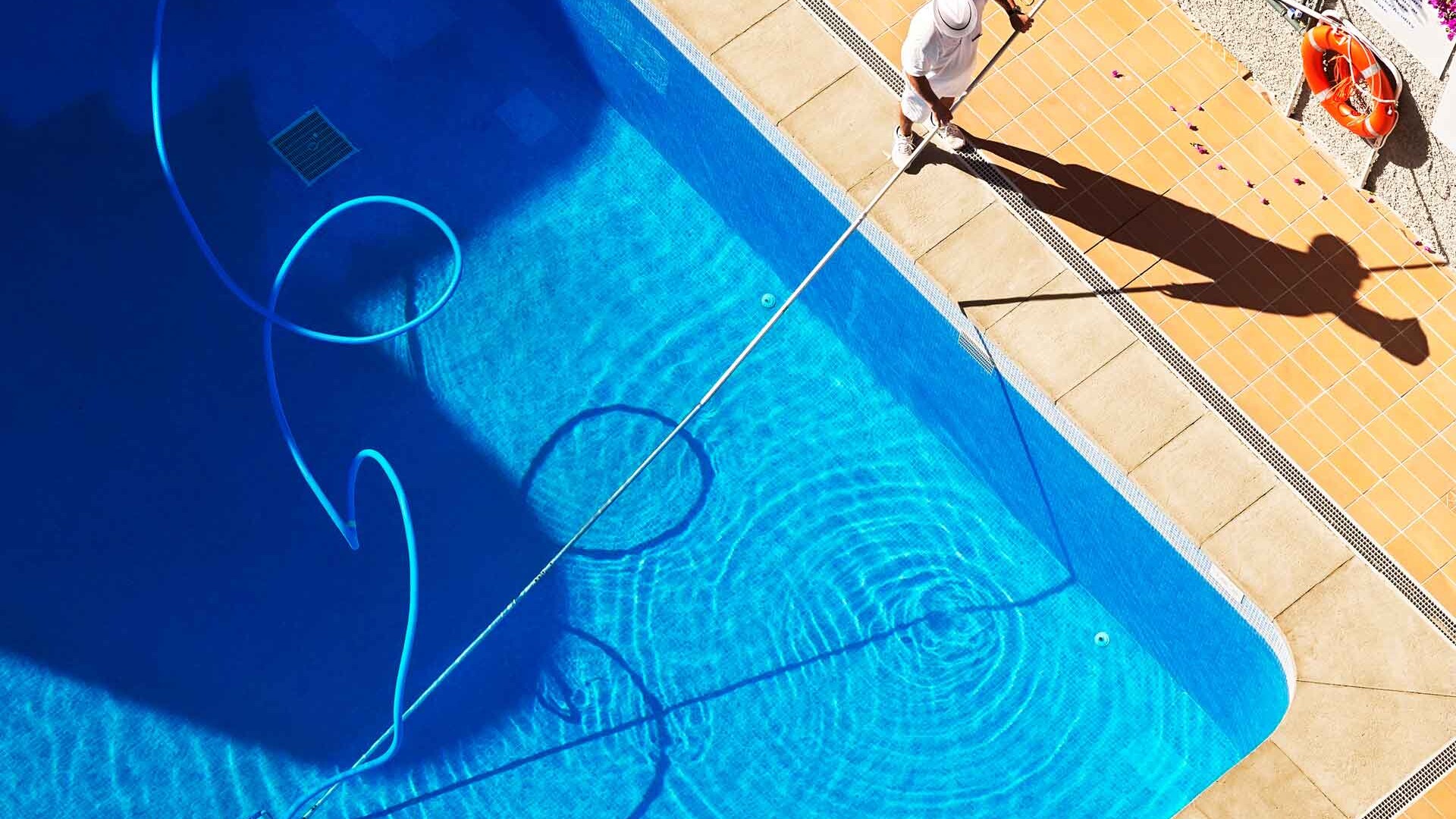
How Each Type Works: The Technology Explained
Suction-Side Cleaners: How They Actually Move
A suction cleaner connects to the pool’s suction line — either directly to the skimmer or to a dedicated cleaner port on the pool wall. The pool pump draws water through the cleaner, creating suction at the cleaner head. This suction propels the cleaner across the pool floor and (in some models) up the walls, while debris is sucked through a hose and into the pool’s existing filter and skimmer basket.
Movement pattern: most suction cleaners move in a random pattern, changing direction when they contact a wall or obstacle. Higher-end suction models use a more structured back-and-forth pattern, but full systematic coverage is rare in this category.
What gets cleaned: primarily the pool floor. Most suction cleaners handle the floor well. Wall climbing performance varies — cheaper models rarely climb walls effectively; better models handle gentle slopes and some wall surfaces.
Pressure-Side Cleaners: How They Actually Move
A pressure cleaner connects to the pool’s return line — the fitting where filtered water returns to the pool. Pressurized water flowing through the cleaner drives a turbine or venturi system that propels the cleaner and sweeps debris into an onboard collection bag. The bag is separate from the pool’s filter, meaning large debris does not clog the pool filter.
Most pressure cleaners require a dedicated booster pump to generate sufficient pressure. Without adequate pressure, the cleaner moves slowly or stops entirely. Some models work without a booster pump if the return line pressure is sufficient, but this requires confirmation against the specific model’s minimum pressure specification.
Movement pattern: random, similar to suction cleaners. The randomness means the same corners may be missed repeatedly, particularly in pools with irregular shapes.
Strength: pressure cleaners with large debris bags are the best option for pools with heavy leaf loads, pine needles, acorns, or other large organic debris. The dedicated bag means this debris goes straight to the bag rather than clogging the pool filter.
Robotic Cleaners: How They Actually Move
A robotic cleaner plugs into a standard 110V or 120V household electrical outlet via a low-voltage transformer. It has its own drive motors for movement, its own pump for water circulation through its internal filter, and its own brushes for scrubbing pool surfaces. It operates completely independently of the pool’s pump, filter, and plumbing.
Movement pattern: this is where robotics differ most significantly from suction and pressure cleaners. Most modern robotic cleaners use one of three navigation approaches:
- Random pattern — older or budget models bounce off walls and change direction unpredictably, similar to suction cleaners
- Systematic scanning — the cleaner maps the pool and follows a methodical grid or row-by-row pattern that covers the floor completely
- Gyroscope or sensor-guided — uses internal sensors to detect the pool shape and navigate efficiently
The systematic navigation of mid-range and premium robotic cleaners is the most meaningful practical difference from suction and pressure alternatives. A 20,000-gallon pool that takes a suction cleaner 4-5 hours to cover adequately may be cleaned more thoroughly by a robotic in 2-3 hours.
What gets cleaned: floor on all models. Walls on most mid-range and premium models. Waterline tile on some premium models. Robotic cleaners offer the most complete cleaning coverage of any automatic cleaner type.
Head-to-Head Comparison: All Three Types
| Feature | Suction-Side | Pressure-Side | Robotic |
| Upfront cost | $150-500 | $250-1,200 (without booster pump: $250-700) | $400-2,000+ |
| Booster pump required | No | Often yes ($500-900+ additional including installation) | No — plugs into outlet |
| Operating electricity cost | Low — uses pool pump already running | Medium — booster pump adds run time | Low — $5-30/season independently |
| Pool pump impact | Must run during cleaning; adds to daily run time | Must run during cleaning; booster pump additional | Zero — completely independent |
| Coverage pattern | Random — misses corners repeatedly | Random — same limitation | Systematic on most mid-range models |
| Cleans walls | Rarely on cheaper models; some on higher-end | Some models; limited wall climbing | Most models; premium models reach waterline |
| Cleans waterline | No | No | Premium models only |
| Handles large debris | Poor — can clog filter and hose | Excellent — dedicated onboard debris bag | Good to excellent depending on filter size |
| Handles fine debris | Good — goes through pool filter | Poor — bag misses fine particles | Excellent — fine filter cartridges available |
| Variable speed pump compatible | Check minimum GPM requirement | Check minimum pressure requirement | Yes — fully independent |
| Above-ground pool compatible | Most models yes | Rarely — needs booster pump | Some models rated for above-ground |
| Typical lifespan | 3-6 years | 4-8 years | 4-8 years |
| Filter maintenance | Pool filter handles it | Empty debris bag after each use | Rinse cartridge after each use |
The Questions That Actually Determine Which Type You Need
What shape is your pool?
This is the single most important selection factor that most buying guides skip entirely.
Rectangular or oval pools: all three cleaner types work. Suction and pressure cleaners navigate these shapes adequately despite their random movement — the straight walls mean they cover the space reasonably well over time.
Kidney, L-shaped, freeform, or irregular pools: robotic cleaners with systematic navigation have a significant advantage. A suction or pressure cleaner bouncing off irregular angles creates permanent uncleaned dead zones — the same corner by the kidney curve gets skipped every cycle while other areas get cleaned multiple times. A robotic with mapping capability covers the entire floor regardless of shape.
Bottom Line: If your pool is not a simple rectangle or oval, a robotic cleaner with systematic navigation is the correct choice. The dead zones created by random-pattern cleaners in irregular pools require manual vacuuming to supplement — which defeats the purpose of automatic cleaning.
What is the primary debris problem in your pool?
| Primary Debris Type | Best Cleaner Type | Why |
| Heavy leaves, acorns, pine needles, twigs | Pressure cleaner with large debris bag | Dedicated onboard bag handles volume without clogging pool filter. Suction cleaners can jam on heavy leaf loads. |
| Fine debris — dust, pollen, sand, algae | Robotic with fine filter cartridge (2-micron or finer) | Robotic filter cartridges capture fine particles that pool filters miss. Pressure bag misses fine debris entirely. |
| Both large and fine debris | Robotic with dual-stage filter (coarse pre-filter + fine cartridge) | Only robotic cleaners with dual-stage filtration handle both debris types effectively in one unit. |
| Algae on walls and floor | Robotic with scrubbing brushes | Active brush scrubbing breaks algae off surfaces. Suction and pressure cleaners primarily vacuum — they do not scrub effectively. |
| Moderate mixed debris (typical residential pool) | Suction cleaner (budget) or robotic (best results) | Both handle typical debris loads. Robotic provides more thorough cleaning; suction cleaner costs less upfront. |
Do you have a variable speed pump?
This question eliminates suction and pressure cleaners for many pool owners and they do not realize it until after purchase.
Variable speed pumps (VSPs) run at low RPMs for energy efficiency — typically 1,000-1,500 RPM for circulation versus 3,000+ RPM at high speed. Many suction cleaners require a minimum flow rate of 30-45 gallons per minute (GPM) to operate properly. At low VSP speeds, flow rates may drop to 15-25 GPM — not enough to drive a suction cleaner. The cleaner sits motionless or barely crawls.
Pressure cleaners have the same issue — minimum inlet pressure requirements that low-speed VSP operation cannot meet without running the pump at a higher (less efficient) speed.
✓ KEY FACT: Robotic cleaners have their own motors and are completely unaffected by pump speed or flow rate. If you have a variable speed pump and want to keep it running at energy-efficient low speeds while the pool cleans, a robotic cleaner is the only choice that allows this.
How large is your pool?
| Pool Size | Best Cleaner Match | Key Consideration |
| Under 10,000 gallons (small above-ground or plunge pool) | Suction cleaner ($150-250) | Simple floor coverage adequate. No need to overspend. |
| 10,000-20,000 gallons (standard residential inground) | Mid-range suction ($250-400) or entry robotic ($500-800) | Both work. Robotic wins on wall cleaning and VSP compatibility. |
| 20,000-30,000 gallons (large residential) | Robotic ($700-1,200) | Coverage efficiency justifies cost. Suction cleaner takes 5+ hours; robotic covers it in 2-3. |
| 30,000+ gallons (very large residential or commercial) | Premium robotic ($1,200-2,000) | Look for extended cord length (60+ ft), large filter capacity, and systematic navigation. |
Do you have a pool heater?
If you have a pool heater, do not use chlorine tablets in the skimmer basket — and separately, confirm that your suction cleaner setup does not route highly concentrated water through the heater. This is primarily a chemical concern rather than a cleaner selection concern, but it affects how you configure the suction port for cleaner connection.
Robotic cleaners are unaffected by heater presence. Pressure cleaners with a dedicated booster pump bypass the heater circuit. This is a non-issue for robotic buyers.
What is your pool surface type?
| Pool Surface | Cleaner Compatibility | Notes |
| Plaster / concrete / gunite | All three types compatible | Robotic scrubbing brushes provide the most effective algae removal from rough plaster surfaces. |
| Vinyl liner | Use soft-brush suction cleaners or robotic models rated for vinyl | Aggressive suction heads or hard brushes can scratch or puncture vinyl. Confirm ‘vinyl safe’ on any cleaner purchased. |
| Fiberglass | Most robotic and suction cleaners compatible | Avoid pressure cleaners with metal parts that can scratch the gelcoat. Soft-brush robotics are ideal. |
| Pebble Tec / aggregate | Robotic with PVC brushes preferred | Aggressive rubber brushes can wear aggregate surfaces over time. PVC brush robots are gentler. |
The Concerns Buyers Rarely Ask About Before Purchasing
Cable length on robotic cleaners
The most common complaint in robotic cleaner reviews — and the easiest to avoid with one measurement before buying. Standard robotic cleaner cables are 40-60 feet. Measure your pool’s longest diagonal dimension, then add the distance from the nearest GFCI outlet to the pool edge. If that total exceeds the cable length, either the cleaner will not reach all areas or the cable will pull taut and restrict movement.
For a 40 x 20 foot pool (45-foot diagonal) with an outlet 15 feet from the pool edge, you need a minimum 60-foot cable. A 40-foot cable on the same pool leaves the far corners uncleaned. Measure before you buy.
✓ KEY FACT: GFCI outlet requirement: robotic cleaners must be plugged into a GFCI-protected outlet. National Electrical Code (NEC) Section 680.22 requires GFCI protection for all outlets within 20 feet of a pool. Never use an extension cord with a robotic cleaner — the transformer must plug directly into a GFCI outlet.
Minimum flow rate for suction cleaners with variable speed pumps
Before purchasing any suction-side cleaner, find the minimum required GPM (gallons per minute) in the product specifications — not the marketing copy, the actual spec sheet. Compare it against your pump’s flow rate at your typical low-speed operating setting. If your pump’s low-speed flow rate is below the cleaner’s minimum requirement, the cleaner will not operate at those settings. You will either run the pump at higher (less efficient) speeds during cleaning or get a cleaner that sits motionless.
Replacement parts availability
The hidden long-term cost of any automatic cleaner is parts. Brushes wear out. Filter cartridges need replacement. Drive belts and tracks degrade. Power supplies fail. The question is whether parts are still available when you need them in year 4 or 5.
Before purchasing any robotic cleaner, search for replacement brushes, filter cartridges, and power supplies for that specific model. If they are not readily available from US distributors at reasonable prices, the cleaner has a limited practical lifespan regardless of its initial build quality. This disproportionately affects budget robotic brands from lesser-known manufacturers.
Winter storage for robotic cleaners
Robotic cleaners must not be stored where temperatures drop below freezing. Internal water remaining in the pump and filter system expands when frozen, cracking the pump housing and internal components. In climates with freezing winters: drain the cleaner thoroughly after the final use of the season, dry it completely, and store indoors. A frozen robotic cleaner is a destroyed robotic cleaner — manufacturer warranties typically exclude freeze damage.
Above-ground pool compatibility
Not all robotic cleaners are rated for above-ground pools. The curved walls and softer liner materials of most above-ground pools require specific design accommodations. Before purchasing a robotic cleaner for an above-ground pool, confirm the manufacturer explicitly rates it for above-ground use. Many inground-rated robotics will damage above-ground liners or fail to navigate the curved walls correctly.
Recommended Approach by Pool Scenario
| Pool Scenario | Recommended Type | Price Range | Why This Choice |
| Round or oval above-ground pool, moderate debris | Suction cleaner (above-ground rated) | $150-300 | Simple shape, manageable debris. VSP rarely an issue for above-ground. No need to overspend. |
| Small inground rectangular pool, light debris, no heater | Mid-range suction cleaner | $250-400 | Shape and debris load suit suction well. Budget-conscious choice that works. |
| Standard inground pool, moderate debris, variable speed pump | Entry robotic cleaner | $500-800 | VSP compatibility alone often justifies the cost difference versus suction. Wall cleaning is a bonus. |
| Inground pool near trees with heavy leaf load | Pressure cleaner with large debris bag | $400-700 (without booster pump) | Dedicated bag handles leaf volume without clogging pool filter. Add booster pump cost if required. |
| Irregular or freeform inground pool | Robotic with systematic navigation | $700-1,200 | Random-pattern cleaners miss corners permanently. Systematic navigation covers the whole floor. |
| Large inground pool (20,000+ gallons), any shape | Mid-range to premium robotic | $800-1,500 | Coverage efficiency and cleaning time justify the premium over suction at this scale. |
| Pool with plaster algae problems, heavy scrubbing needed | Robotic with active scrubbing brushes | $700-1,500 | Only robotic cleaners actively scrub surfaces. Suction and pressure cleaners primarily vacuum. |
If X Happens, Do Y: Troubleshooting Automatic Cleaners
Why is my suction cleaner not moving or barely moving?
Three causes in order of likelihood:
- Pool pump flow rate is insufficient — check that the pump is running at the correct speed for the cleaner. If you have a variable speed pump, it may be running at a low-speed setting below the cleaner’s minimum GPM requirement. Increase pump speed during cleaning cycles.
- Clogged hose or cleaner head — debris lodged in the hose or at the cleaner intake restricts suction. Remove the hose from the skimmer, turn the pump off, clear any blockage, and restart.
- Air leak in the hose or connection — a cracked hose section or loose fitting allows air into the suction line, reducing effective suction. Inspect all hose connections and sections for cracks.
Why is my robotic cleaner not climbing walls?
Two causes:
- The cleaner model is not rated for wall climbing — budget robotic cleaners are often floor-only units. Check the product specifications. ‘Wall climbing’ should be explicitly listed as a feature, not assumed.
- The brushes are worn — wall climbing depends on brush grip on the pool surface. Worn brushes lose traction and the cleaner slides back down. Check brush condition and replace if worn significantly.
Why does my robotic cleaner keep tangling its cable?
Cable tangling is the most common robotic cleaner complaint and the most preventable. Three solutions:
- Add a cable swivel — a $10-20 inline swivel fits between the power supply and the cleaner cable and eliminates 90% of tangling issues. This is the first fix to try for any tangling problem.
- Run the cleaner for full cycles — stopping a robotic mid-cycle often leaves the cable in a twisted state. Run complete cycles and retrieve the cleaner from the same end each time.
- Match the cable length to your pool — excess cable that exceeds what the pool requires bunches up and tangles. Some owners trim excess cable with a proper splice kit if the manufacturer supports it.
Why is my pool still dirty after the automatic cleaner ran?
Four causes:
- The cleaner is not covering the whole pool — for suction and pressure cleaners, check that the hose length is appropriate for the pool size and that the cleaner is not getting stuck in one area. For robotic cleaners, confirm the cable allows full pool coverage and that the navigation pattern is not repeating the same section.
- The debris is too fine for the cleaner’s filter — suction cleaner debris goes to the pool filter; if the filter is dirty, it cannot capture fine particles. Backwash or clean the filter. For robotic cleaners, rinse the filter cartridge — a clogged cartridge dramatically reduces cleaning effectiveness.
- The cleaner is not running long enough — most robotic cleaners run 2-3 hour cycles for pools under 20,000 gallons. Large pools may need 3-4 hour cycles or multiple cycles.
- Algae is growing faster than the cleaner can remove it — this is a chemistry problem, not a cleaner problem. Shock the pool, address CYA if elevated, and ensure adequate free chlorine before expecting the cleaner to keep up.
Can I use my automatic cleaner during a shock treatment?
Do not run any automatic cleaner during or immediately after shocking. High free chlorine levels above 10 ppm can damage rubber seals, belts, and plastic components in some cleaners with extended exposure. Wait until free chlorine drops to the normal maintenance range of 1-4 ppm before running any automatic cleaner. This typically takes 24-48 hours after a standard shock dose.
10 Buyer Questions Answered
How often should I run my automatic pool cleaner?
Most residential pools benefit from running an automatic cleaner 2-4 times per week during peak swim season. Running daily is not harmful but also not necessary for most pools with adequate chemical management. Increase frequency during high-use periods, after heavy rainstorms, or if the pool is near trees with significant debris. Running the cleaner on a timer — available as an accessory for most robotic cleaners — is the most practical approach.
Can an automatic pool cleaner replace manual vacuuming entirely?
For most pools with a well-matched cleaner, yes — with one exception. Automatic cleaners do not handle the corners and tight angles around steps, benches, and ledges as effectively as manual vacuuming. These areas may need manual attention monthly even with a robotic cleaner. For suction and pressure cleaners covering irregular pools, manual vacuuming of missed dead zones may be needed weekly.
Should I remove my automatic cleaner when people are swimming?
Yes. Remove all automatic cleaners from the pool before swimming. The cleaner cable (for robotic) or hose (for suction/pressure) creates a trip and entanglement hazard. For robotic cleaners, the electrical connection — even through a low-voltage transformer — is a safety concern with swimmers present. Pool safety standards recommend removing all pool equipment before swimming.
Do I still need to brush my pool manually if I have a robotic cleaner?
Occasional manual brushing of steps, corners, and the waterline remains worthwhile even with a robotic cleaner. Steps with tight corners, the waterline tile, and areas directly behind ladders and fixtures are where algae establishes first — and where even good robotic cleaners have the least access. A monthly brush-down of these areas prevents algae from establishing in the spots the cleaner misses.
Is a more expensive robotic cleaner worth it versus a budget model?
The meaningful differences between budget ($400-600) and mid-range ($700-1,200) robotic cleaners are navigation quality, filter capacity, wall climbing effectiveness, and parts availability. Budget models often use random navigation — similar to suction cleaners — which means uneven coverage. Mid-range models typically use systematic scanning that covers the pool floor completely. For a pool under 15,000 gallons with a simple shape, a budget robotic may be adequate. For larger or irregular pools, the systematic navigation of a mid-range model justifies the premium.
Can robotic pool cleaners be used in saltwater pools?
Yes, most robotic cleaners are compatible with saltwater pools. Salt concentration in pools (2,500-3,500 ppm) is much lower than seawater and does not damage standard robotic components. Confirm saltwater compatibility in the product specifications — most major brands explicitly list it. Rinse the cleaner with fresh water after each use in a saltwater pool to prevent salt buildup on components.
How do I know when to replace the brushes on my robotic cleaner?
Inspect brushes every 3-6 months. Signs that brushes need replacement: visible wear where the bristles are shorter than 50% of their original length, the cleaner is leaving visible dirt streaks on surfaces after cleaning, or the cleaner is struggling to climb walls it previously handled. Most robotic cleaner brushes last 1-2 seasons with regular use. Replacement brush sets cost $20-60 depending on the model.
What is the difference between a robotic cleaner with a bag filter vs. a cartridge filter?
Bag filters are easier to empty — open the lid, remove the bag, shake it out over a trash can — but capture only medium to large debris. Fine particles like pollen, dust, and algae spores pass through. Cartridge filters require rinsing with a hose after each use but capture significantly finer particles. For pools with algae history, fine debris, or pollen problems, a cartridge filter robotic delivers noticeably cleaner water. For leaf-heavy pools, a bag filter or dual-stage system handles the volume more conveniently.
Can I use a pressure cleaner without a booster pump?
Some pressure cleaners are designed to work with existing return line pressure without a separate booster pump — these are called non-booster or Venturi-drive models. They generally work adequately in pools with higher return pressure but may move sluggishly in lower-pressure systems. Check the product specifications for ‘booster pump required’ or ‘works without booster pump.’ If the spec sheet does not explicitly state it works without a booster pump, assume one is required.
How long should a robotic pool cleaner cycle run?
Most robotic cleaners run preset cycles of 1.5, 2, or 3 hours depending on the model and selected mode. For pools under 15,000 gallons: a 1.5-2 hour cycle is typically sufficient. For pools 15,000-25,000 gallons: 2-3 hours. For pools over 25,000 gallons: 3 hours or two consecutive cycles. Some premium models with mapping capability automatically adjust cycle time based on detected pool size. Running a cleaner longer than necessary does not harm the pool but does wear brushes and belts faster.
Where to Buy Pool Cleaners
Doheny’s Pool Supplies carries a full range of automatic pool cleaners — suction-side, pressure-side, and robotic — with detailed product specifications including minimum flow rates, cord lengths, wall climbing capability, filter type, and surface compatibility listed for each unit. Family owned since 1967. Free shipping on orders over $50. Shop Doheny’s pool cleaners →
Return policies matter more for cleaners than for chemicals — some compatibility issues only become apparent after the first few runs. Confirm the return window and policy before purchasing any automatic cleaner. See our Where to Buy page for direct links and current April 2026 pricing across all cleaner categories.
External References
National Electrical Code (NEC) Section 680.22 — GFCI outlet requirement within 20 feet of pool: https://www.nfpa.org/codes-and-standards/nfpa-70-standard-for-the-electrical-code
US Consumer Product Safety Commission — pool and spa safety resources: https://www.cpsc.gov/Safety-Education/Safety-Education-Centers/Pool-and-Spa-Safety
US Poison Control Center: 1-800-222-1222 — https://www.poison.org